
Cybersecurity is often still framed as a cost center. It’s considered a necessary investment to reduce risk, satisfy compliance requirements, and keep threats at bay. But for IT leaders sitting in the crosshairs of operational expectations and executive scrutiny, that framing is dangerously incomplete.
The truth: Weak cyber posture isn’t just a security issue. It’s a silent profit killer.
It doesn’t always show up as a headline-making breach or a ransomware payout. More often, it erodes your bottom line gradually through inefficiencies, downtime, audit friction, lost productivity, delayed initiatives, and diminished trust. It hides in the gaps between tools, in misconfigurations no one owns, and in the growing complexity of modern IT environments.
If you’re an IT Director, VP, CIO, or CISO, you’re the one expected to explain it, even after the damage is already done.

Table of Contents
The Pressure You’re Under Isn’t Imagined
Before diving into the mechanics of cyber posture and profit erosion, it’s worth acknowledging the reality you operate in.
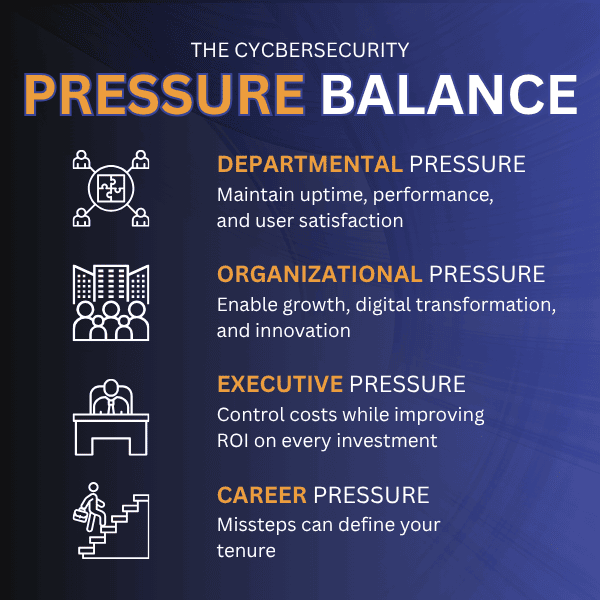
You’re not just responsible for “keeping things secure.” You’re balancing:
- Departmental pressure to maintain uptime, performance, and user satisfaction
- Organizational pressure to enable growth, digital transformation, and innovation
- Executive pressure to control costs while proving ROI on every investment
- Career pressure where one misstep can define your tenure
Security decisions don’t happen in a vacuum. Every control you implement introduces friction somewhere else, often slowing users, delaying deployments, or increasing complexity for your team.
And yet, when something goes wrong, the question isn’t why was this so complex? It’s why wasn’t this prevented?
That tension is where weak cyber posture quietly takes root.
What “Weak Cyber Posture” Actually Looks Like
Weak cyber posture is rarely obvious. In fact, most organizations believe they’re in a reasonably good place.
You’ve invested in firewalls, endpoint protection, identity tools, maybe even Zero Trust initiatives. You’ve passed audits. You’ve built policies. You’ve hired talent.
However, cyber posture isn’t defined by what you’ve deployed. It’s defined by how well everything works together.
Weak posture often looks like:
- Security tools operating in silos with limited visibility across environments
- Outdated or inconsistent network segmentation
- Over-permissioned users and unclear identity governance
- Manual processes for monitoring, response, and remediation
- Gaps between on-prem, cloud, and hybrid infrastructure controls
- Policies that exist on paper but aren’t enforced in practice
It’s not a lack of investment. It’s more often a lack of alignment, validation, and continuous optimization.
And that’s where the financial impact begins.
Hidden Ways Weak Cyber Posture Erodes Profit
1. Operational Inefficiency
When your environment lacks clarity and cohesion, your team spends more time reacting than progressing.
Instead of focusing on strategic initiatives, your engineers are:
- Chasing down alerts that lack context
- Manually validating configurations
- Troubleshooting access issues caused by inconsistent policies
- Navigating overlapping or redundant tools
This creates a compounding effect: higher labor costs, slower execution, and reduced capacity for innovation.
From a leadership perspective, it’s frustrating. You’ve invested in tools meant to increase efficiency, yet your team is buried in complexity.
2. Downtime and Performance Degradation
Not all downtime comes from catastrophic failures. In fact, most of it doesn’t. Subtle misconfigurations, poorly designed network architectures, and unoptimized security controls can introduce:
- Latency across critical applications
- Intermittent outages that are difficult to diagnose
- Bottlenecks in data flow and user access
These issues directly impact employee productivity and customer experience. While they may not trigger incident response protocols, they absolutely impact revenue.
3. Delayed Business Initiatives
Security is often cited as a blocker because that’s exactly what it becomes one when posture isn’t well understood.
When launching new applications, expanding to the cloud, or integrating acquisitions, IT leaders are asked:
- “Is this secure?”
- “What needs to change before we proceed?”
- “What’s the risk?”
If your environment lacks visibility and confidence, the safest answer becomes delay.
Projects stall. Time-to-market slips. Competitive advantage erodes.
Thus security—ironically—becomes the bottleneck to growth.
4. Audit and Compliance Drag
Passing an audit doesn’t mean your environment is secure. It means you met a defined set of requirements at a specific point in time.
Maintaining that state often requires:
- Manual evidence collection
- Repetitive validation of controls
- Last-minute scrambling before audit deadlines
Weak cyber posture turns compliance into a recurring fire drill instead of a byproduct of strong operations.
The cost isn’t just in audit preparation. It’s in the distraction from strategic work and the ongoing strain on your team.
5. Increased Risk Exposure (Without Visibility)
Increased risk exposure is the most obvious, and most misunderstood, impact.
While weak posture increases the likelihood of a breach, it more importantly increases the unknown risk in your environment.
You don’t know:
- Where your most critical vulnerabilities are
- How an attacker could move laterally
That uncertainty is dangerous, both technically and from a leadership standpoint.
When executives ask, “How secure are we?”, confidence without validation is a risk in itself.
Why Traditional Approaches Aren’t Solving the Problem
Most organizations approach security improvement the same way:
1. Identify a gap
2. Purchase a tool
3. Deploy it
4. Move on
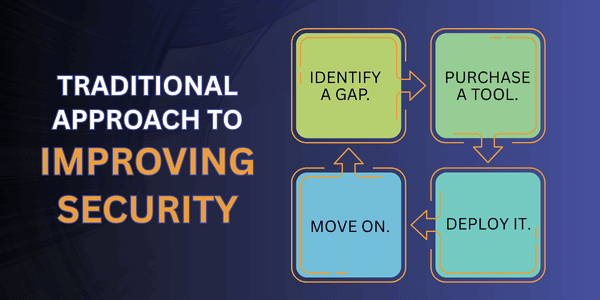
This is a good start, but modern environments don’t fail because of missing tools. They fail because of misalignment.
You can’t tool your way out of a posture problem.
Without a clear, validated understanding of how your network, security controls, and policies interact, each new investment adds complexity instead of clarity.
That’s why you may feel stuck in a cycle of:
- Continuous spending
- Incremental improvements
- Persistent uncertainty
The missing piece isn’t another solution. It’s visibility and validation.
The Leadership Risk: When Cyber Posture Becomes Personal
Cyber posture isn’t just an operational concern. It’s a career-defining factor.
When something goes wrong, the questions come quickly:
- “Did we know about this risk?”
- “Why wasn’t it addressed?”
- “What controls failed?”
Even in well-funded environments, gaps in visibility and validation can create the perception of negligence.
And perception matters.
Strong cyber posture gives you technical resilience, but more importantly defensible confidence.
You’ll have the ability to say:
- “Here’s where we are.”
- “Here’s what we’ve validated.”
- “Here’s what we’re prioritizing next.”
That clarity changes the conversation. Instead of responding with reactive justification, you’re now responding with proactive leadership.
What High-Performing Organizations Do Differently
Organizations that successfully align security with business outcomes take a different approach.
They don’t just deploy controls. They continuously assess and validate them.
They focus on:
- End-to-end visibility across network, cloud, and hybrid environments
- Policy enforcement that matches real-world configurations
- Continuous validation instead of point-in-time audits
Most importantly, they treat cyber posture as a dynamic, measurable asset instead of a static checklist.

The Turning Point: From Assumption to Validation
If weak cyber posture is the invisible profit killer, then validation is the antidote.
You can’t improve what you can’t clearly see.
You can’t confidently lead what you haven’t objectively assessed.
That’s where a structured, data-driven approach becomes critical.
Not another tool deployment, but a way to:
- Map your current environment
- Identify hidden gaps and inefficiencies
- Quantify risk in business terms
- Prioritize improvements based on impact
A Practical First Step: Assess Before You Invest
Before committing to new tools, architectures, or initiatives, the most effective step you can take is to understand where you truly stand today.
A comprehensive Network Security Review helps you:
- Uncover misconfigurations and policy gaps
- Visualize how traffic flows across your environment
- Identify potential lateral movement paths
- Validate whether existing controls are working as intended
- Align security posture with business priorities
It transforms security from assumption to evidence.
Why This Matters Now
The pace of change isn’t slowing down.
Cloud adoption is accelerating. Workforces are more distributed. Threat actors are more sophisticated. Expectations from boards, executives, and customers are higher than ever.
Today, weak cyber posture doesn’t just create risk. It creates drag. It slows decisions, increases costs, and limits agility.
Over time, it quietly erodes the very outcomes your organization is trying to achieve.
Take Control of Your Cyber Posture
You don’t need another layer of complexity.
You need clarity.
If you’re ready to move from uncertainty to confidence, the best place to start is with a clear, objective view of your current state.
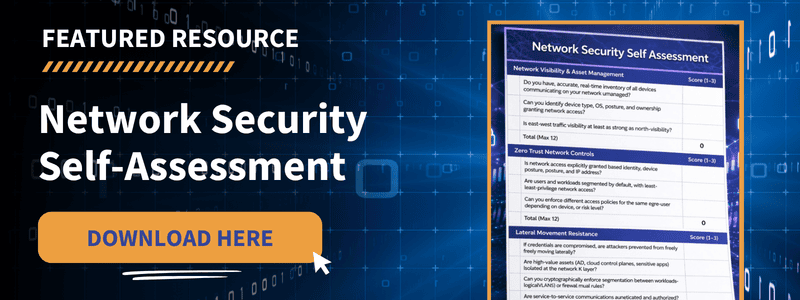
Download our free Network Security Assessment Tool to evaluate your environment, identify hidden risks, and uncover opportunities to strengthen your security posture—without adding unnecessary complexity.
Related Articles:
About the Author:

KNZ Solutions is a systems integrator that provides strategic IT advisory and infrastructure expertise. We help organizations modernize their technology environments, strengthen security and data governance, and gain greater visibility into the systems that power their business.


