
For the past decade, “IT modernization” was treated as a frantic, unchecked sprint to the public cloud. Today, the bill for that reckless “lift-and-shift” mandate has come due. Enterprise IT teams are drowning in compounding technical debt, skyrocketing egress fees, and a harsh operational reality: aging core systems fundamentally cannot handle the high-performance computing workloads required by modern innovation.
You simply cannot execute a 2026 Agentic AI strategy on a 2012 infrastructure foundation. The latency will choke your data, and legacy security gaps will expose your proprietary models. True IT modernization must be strictly outcomes-based—engineered to drive measurable business results rather than just collecting technology for the sake of it.
Transitioning legacy infrastructure is a monumental task, but it does not have to be a budget-draining nightmare. To stop applying band-aids to aging servers and start building a resilient, future-ready enterprise, here is the step-by-step roadmap to safely execute your modernization journey.
Phase 1: Triage Your IT Infrastructure
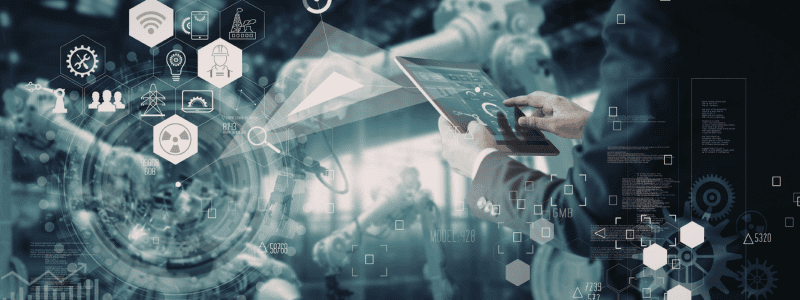
Before writing a single line of code, altering a firewall policy, or decommissioning a single server, you must establish an irrefutable baseline of your current environment. The single biggest reason IT modernization initiatives fail is the attempt to transition the entire monolithic architecture simultaneously.
Map the Technical Debt Against Business Value: Modernization must start as a financial and operational audit. You must evaluate every application, hardware asset, and workload against its actual business outcome. Does this application drive revenue? Does it support critical marketing automation workflows, like your content management systems or inbound lead pipelines? If a legacy application costs more to maintain in specialized support and power than the value it provides to the organization, it should be immediately flagged for retirement. Decommissioning low-value, bloated applications upfront acts as a direct funding mechanism for the rest of your IT modernization journey.
Root Out Shadow AI: In 2026, shadow IT has evolved into a far more dangerous variant. You are no longer just looking for unsanctioned cloud storage accounts; you must actively audit for Shadow AI. Across your organization, employees are aggressively using unauthorized, unvetted generative AI tools to write code, analyze corporate data, and automate their daily tasks. Legacy infrastructure lacks the deep observability required to see these data flows. Your initial audit must uncover exactly where your proprietary data is leaking into public models so you can account for these critical vulnerabilities in your new architecture.
Assess Your Data Center Modernization Readiness: You must also evaluate physical constraints. As enterprise workloads become increasingly AI-driven, rack densities are soaring. Can your current data center footprint support the intense power draw and liquid cooling requirements of a modern high-performance computing cluster? If your facility is maxed out on traditional HVAC cooling, physical data center modernization must become step one of your digital transition.
Phase 2: Establish an Identity-First Security Bedrock
You cannot securely transition legacy data if your perimeter is already compromised. The traditional “castle-and-moat” security model—where everything inside the corporate firewall is implicitly trusted—is a catastrophic liability during a massive infrastructure migration.
Deploy Zero Trust Controls Aligned to NIST Frameworks: True IT modernization requires abandoning legacy VPNs and static perimeters. Before workloads begin shifting across hybrid environments, you must implement strict identity and access management (IAM) controls. By adhering to established NIST frameworks for Zero Trust architecture, you ensure that trust is never granted implicitly. Every single user, device, and machine identity must be continuously verified based on context, behavioral analytics, and device health before being granted access to migrating resources.
Secure the Interconnectivity: As you begin decoupling legacy monolithic systems, the APIs and data pipelines connecting them become prime targets for lateral movement by threat actors. You must embed security models that enforce least-privilege access directly into the architecture before the migration begins. Security must serve as the mathematical bedrock of your new environment, never as a feature bolted on after the transition is complete.
Phase 3: The "Smart Hybrid" Workload Placement Strategy
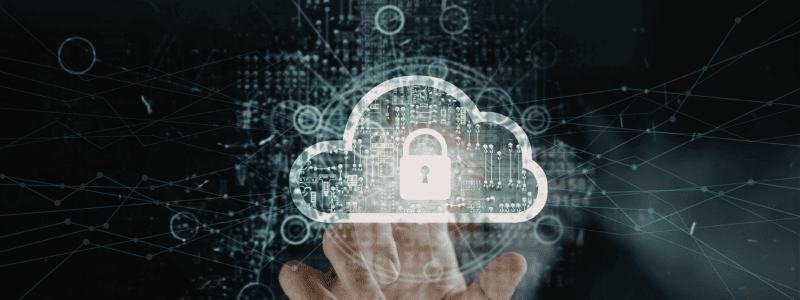
We must abandon the outdated notion that the public cloud is the ultimate, default destination for every single workload. IT modernization in 2026 demands a highly composable, mathematically driven “Smart Hybrid” strategy. It is about putting the right workload in the right environment to maximize performance and control costs.
Strategic Repatriation for Steady-State Workloads: Take a hard, objective look at your predictable, steady-state workloads. Many enterprises are realizing that continuously renting cloud space for baseline, unchanging operations is financially unsustainable. We are seeing a massive wave of cloud repatriation—moving these specific systems back on-premises or into dedicated, high-density colocation facilities. This allows organizations to dramatically reduce monthly infrastructure costs, optimize their power usage, and regain absolute control over their core data.
Targeted Cloud-Native Adoption for High-Performance Compute: Conversely, for dynamic, burstable tasks—such as training large language models, processing massive SEO and search engine datasets, or running complex real-time analytics—you should route those workloads to cloud-native environments or specialized Neoclouds. These environments offer the necessary auto-scaling and high-throughput capabilities required for rapid innovation, ensuring you are only paying for intense compute power when you actually utilize it.
Phase 4: Execute the Strangler Fig Pattern
The traditional “Big Bang” migration—where the entire enterprise holds its breath over a holiday weekend hoping the new system successfully boots up—is an unacceptable operational risk. The modern approach to IT consulting relies strictly on incremental, validated delivery that never disrupts the end-user.
Modularize the Monolith: Using an architectural technique known as the “Strangler Fig Pattern,” you systematically peel away specific functionalities from the legacy monolith and replace them gradually. Instead of trying to rewrite an entire legacy ERP or a clunky, homegrown CRM system at once, you might start by isolating and modernizing just the customer intake or marketing automation module.
Incremental Replacement and API Gateways: You build the new, modernized microservice alongside the old legacy system, allowing both to coexist simultaneously. Using advanced API gateways, you silently redirect user traffic to the modern components without exposing any backend changes to your employees or clients.
Once the new service proves stable, secure, and performant under load, you decommission that specific piece of the legacy system. This ensures continuous operational uptime, strictly limits the blast radius of any potential errors, and allows you to immediately demonstrate tangible ROI to your executive stakeholders.
Phase 5: Activate the Autonomous Layer
Once your workloads are modular, your Zero Trust security is actively enforcing identity, and your hybrid infrastructure is right-sized for scale, you have finally earned the right to introduce advanced enterprise automation.
From Generative to Agentic AI: This is the ultimate operational payoff of your IT modernization efforts. With a clean, highly observable data foundation securely in place, you can confidently integrate Agentic AI. Unlike basic generative chatbots that simply draft text, autonomous agents can execute complex, multi-step workflows across your newly modernized ecosystem.
Because you have successfully eliminated fragile legacy dependencies and established strict API access controls, these agents can safely and autonomously interact with your CRM databases, orchestrate complex B2B email outreach campaigns, resolve IT ticketing requests, and provision new server environments. They act as the new intelligent middleware of your business, driving unprecedented operational efficiency.
The Bottom Line: IT Modernization is an Outcome, Not an Event
Transitioning your legacy infrastructure in 2026 is an ongoing operational strategy, not a finite project with an end date. It requires aligning every technical shift—from managing high-performance computing heat constraints to enforcing identity access—directly to a strategic business outcome. You are not just buying new servers, upgrading your website backend, or migrating to a new cloud tier; you are engineering the future survival and competitive dominance of your business.
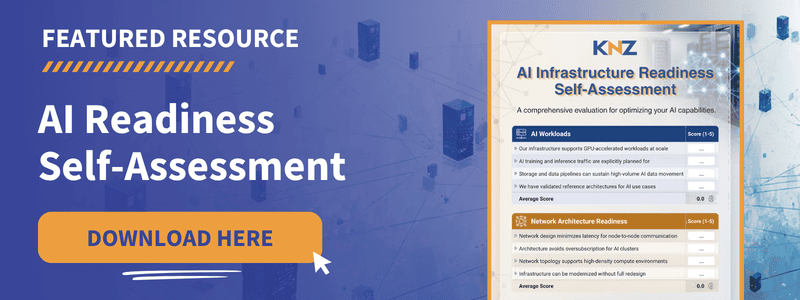
Is your current infrastructure prepared to handle the intense computational, security, and automation demands of the next operational era? Don’t let compounding technical debt and legacy blind spots dictate your future. Evaluating your environment is the crucial first step to taking back control. Take our comprehensive AI Infrastructure Readiness Self-Assessment today to evaluate the exact state of your environment, uncover hidden vulnerabilities, and map a definitive, outcome-driven path for your IT modernization journey.
About the Author:
KNZ Solutions is a systems integrator that provides strategic IT advisory and infrastructure expertise. We help organizations modernize their technology environments, strengthen security and data governance, and gain greater visibility into the systems that power their business.


